
Using colored tiles in the classroom doesn’t have to mean “put out a bin of tiles and see what happens.” These colorful squares are often overlooked, but they’re full of potential when paired with intentional, hands-on tasks.


Using colored tiles in the classroom doesn’t have to mean “put out a bin of tiles and see what happens.” These colorful squares are often overlooked, but they’re full of potential when paired with intentional, hands-on tasks.
Originally published August 2017; substantially updated September 2026 by Christina Hermer, an experienced primary teacher.
Looking for a fresh way to teach word families that actually sticks with your students?
You’re not alone.
Word families have always been a go-to for building early reading skills, but how we teach them matters. When word-family instruction includes explicit sound work, word building, reading and spelling, students can use a familiar pattern to decode words instead of simply memorizing a list.
As more classrooms shift toward Science of Reading-informed practices, we can keep the interactive parts of word-family instruction while making the sound-to-print connection much clearer. Here’s how I teach word families using a hands-on routine that gets students involved at every step.

In early phonics instruction, a word family is a group of words that shares the same rime and spelling pattern. The rime begins with the vowel and includes the sounds that follow it. In map, for example, m is the onset and ap is the rime.
map, cap, tap
Each word has a different beginning sound, but all three share the -ap rime and spelling pattern.
When students know the sounds represented by the letters, they can blend each word and then notice what stays the same. That shared pattern can make it easier to read and spell another word in the family.
The goal is not to have students memorize map, cap and tap as three unanalyzed whole words. We want them to look through the word, connect the letters to sounds and use the familiar pattern to support decoding.
You may also hear the term word family used for words that share a meaningful base, such as help, helper and helpful. That is a morphological word family. In this post, I am using word family to describe the phonics patterns we teach to beginning readers.
Before beginning a word-family lesson, take a quick look at the words you plan to use. Students will have more success if they already have some familiarity with:
If I am introducing the -at family, I want students to be familiar with short a and the beginning consonants in the words we will build. We can then segment and blend cat as /c/ /a/ /t/ before comparing it with mat and sat.
Students do not need to have mastered every one of these skills before they begin, but they should not be meeting all of them for the first time in the same lesson. If blending or segmenting is still difficult, add a little more oral practice and use fewer words.
If you need help identifying those sound-based skills, this explanation of the difference between phonological and phonemic awareness is a helpful place to start.
There is not one word-family list that every teacher needs to follow. The best order is the one that fits the phonics scope and sequence you already use. Word families should reinforce the letter–sound correspondences students have learned, not introduce a collection of unfamiliar spellings all at once.
For example, after students have learned short a and the consonants m, s, c, p and t, you can build words such as mat, sat, cat, pat and tap. I would leave chat out until the ch digraph has been taught.
This keeps word-family work connected to systematic phonics instruction and allows students to use what they know to read each word.
I use a simple routine that moves from sounds to print and then into reading and spelling. The steps can fit into your regular phonics block, small-group lesson or intervention time.
You do not need to teach a large list in one sitting. A few carefully chosen words give students enough practice to blend the sounds, compare the spellings and apply the pattern.
Here’s how it looks in my classroom.
Begin by saying the target vowel sound and showing the spelling pattern. Have students repeat the sound and listen for it in a few words. Then draw attention to the rime you will be using, such as -at.
Keep this part brief and explicit. Students should know what sound they are listening for and which letters represent it before they begin building words.
Build the first word with letter cards or magnetic letters. Have students say each phoneme as you point to or move the letters, and then blend the sounds to read the whole word. This helps them connect the sounds they hear to the letters they see.
We sometimes add a simple movement routine to keep everyone involved:
The movement adds a little novelty, and yes, they will ask to do it again. I still make sure students attend to all of the sounds in the word before they notice the larger shared pattern.
Change one beginning sound at a time to build several words in the family. Students segment and blend each new word before adding it to the list. This is where they begin to see that one part changes while the rime and spelling pattern stay the same.

As you compare the words, ask:
Instead of filling out the anchor chart on my own, I have students help create it. They come up and add a word from the family after we have segmented, built and read it together. Because they contributed to the chart, they are much more likely to use it later.

A quick word-wall note: You do not need to ditch your word wall to teach word families. Build and blend the words together before displaying them, and continue to reference them during real reading and writing. The word-family chart and word wall can support one another.
Once the words have been built, mix up the order and have students read them again. Changing the order matters because it keeps the activity from becoming a memorized chant.
Next, dictate one or two words for students to spell. Have them say the word, segment the sounds and write the letters that represent each sound. You can also ask them to spell a new word from the family that was not included on the chart.
Finish by reading or writing one of the words in a simple sentence. This helps students see that the goal is not just to complete a word list; it is to use the pattern while reading and spelling.

Return to the pattern during reading, writing and independent practice. Ask students to find a word with the target pattern in an appropriate text, use a word in a sentence or sort words by their spelling pattern.
Throughout the week, I include more word-family practice in literacy centers. Students sort, build, read and spell words independently based on the sound-spelling patterns we have already learned. This gives them extra practice without asking them to figure out an untaught pattern on their own.

After we have completed the major families for a short or long vowel, I sometimes use a wrap-up SCOOT activity. I place blank laminated posters around the room, and students work with a partner to rotate, build and record words. It is collaborative, fast-paced and gives me another chance to see which patterns need more review.
Students are involved throughout the routine. They are not just looking at a finished display; they are saying the sounds, moving the letters, building the words, reading them and using them. That involvement is what turns the poster into a classroom tool they understand how to use.
Word-family practice is most useful when students can transfer the pattern beyond the original chart. After teaching a family, I look for several kinds of application:
If students can recite a grouped list but have difficulty reading the same words in a different order or spelling a new example, the pattern has not transferred yet. That quick check tells me to return to word building, blending and sound-by-sound spelling before moving on.
If you want to use this routine without creating every chart from scratch, my Word Family Posters for Short Vowels and Long Vowels give you a consistent place to build and record the words with your students.

The bundle includes posters for short- and long-vowel word families with a simple design that keeps the focus on the words students are building. You can complete a poster together, laminate blank copies for partner practice or keep finished charts available for reading and writing.
The posters are not meant to replace your phonics curriculum. They give you a low-prep way to add the interactive building, blending and spelling practice described in this routine.
Word families still have a useful place in early phonics instruction. When students connect the shared spelling pattern to individual sounds and then apply it in reading and writing, they are doing much more than memorizing a list—they are learning how words work.

How do you start each day in your classroom? Morning work is a popular approach, but there are differing views of what morning work should look like. Hands-on learning is best, especially with math morning tubs that my students beg to use each morning.

The holidays are just around the corner, and your classroom is probably getting a little hectic. One of the easiest ways to keep kids focused and excited about writing in December is by using a Christmas writing center. Over the years, I’ve found that this simple shift not only streamlines my writing block but also boosts my students’ motivation, especially those reluctant writers who suddenly can’t wait to pick up a pencil.


Thanksgiving is a great time to bring a little gratitude, literacy, and creativity into your classroom. These easy Thanksgiving classroom activities combine writing, crafts, and hands-on learning without much extra prep.
Whether you want to make a simple turkey card, try a disguise-a-turkey writing and craft activity, or give students a chance to create with loose parts, these ideas work well in Kindergarten through 2nd grade and are easy to fit in.




 |
| Grab and Graph Math Center |
 |
| Spin and Graph Match Center |


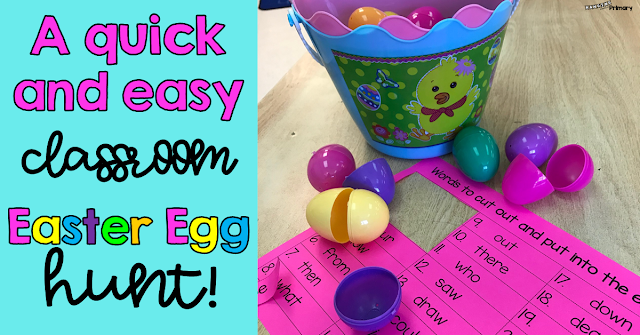
The days in the classroom leading up to Easter are exciting, like any other holiday. The children in my class are counting down the days u...


.png)





All content © Hanging Around In Primary • Template by Georgia Lou Studios • Blog Design by Chalk & Apples Design