Hands-On Math Activities for Primary Students: Easy & Engaging Ideas

Hands-On Math Activities for Primary Students: Easy & Engaging Ideas

Looking for effective hands-on math activities for primary students? These engaging activities help primary students build strong number sense, improve engagement, and develop a deeper understanding of mathematical concepts.


hands-on math activities for primary students using manipulatives

Hands-On Activities for Colored Tiles That Go Beyond Free Play

Plastic colored tiles spilling from a container next to the text: Hands-On Activities for Colored Tiles That Go Beyond Free Play.

Using colored tiles in the classroom doesn’t have to mean “put out a bin of tiles and see what happens.” These colorful squares are often overlooked, but they’re full of potential when paired with intentional, hands-on tasks. 

Beyond Busy Work: Pattern Block Activities That Actually Teach Math

Pattern block activities blog post header showing colorful shapes and teaching headline

Pattern blocks deserve to be used for more than free play!

Pattern blocks often get lumped into the “free choice” or “early finisher” bin, but they’re so much more than busy work. They are a powerhouse for pattern block activities like spatial reasoning, geometry vocabulary, symmetry skills, and even problem-solving, especially for use during morning tubs or morning work. When used with intentional tasks, they quickly become one of your most versatile and loved math manipulatives.

Dice Games for Math: Hands-On Activities Your Students Will Love

Colorful dice spilled on a table with text: Dice games for math that your students will love.

Easy-to-use math dice games that keep your K–1 students learning—and loving it!

Engaging Domino Math Activities That Go Beyond Just Matching Dots

Domino math activities that go beyond matching dots, with a pile of red, black, and white dominoes

Dominoes are a powerful math tool!

Fun Math Card Games for Young Learners that Boost Skills

Math Playing card games showing kid-friendly number games that build fluency and comparison skills

Don’t Underestimate That Deck of Cards

If you’ve got a few spare decks of playing cards in your classroom closet, you’ve got a no-prep math card game ready to go.

Playing cards are a surprisingly versatile tool for math card games, practicing addition, subtraction, comparison, and number sense. The best part is that kids love them. They feel like games, but they're doing real math.

I’m sharing two simple, no-prep math card games you can play right away using a regular deck of cards, plus a few more class favorites that your students will love!

Base 10 Blocks Activities for Place Value: Ideas to Try This Week

Base 10 block activities for hands-on math practice all year long with yellow and blue base ten blocks

Base 10 Blocks can and should be used all year long! 


Base 10 blocks are manipulatives we all have tucked away in a bin, but they’re often underused or saved just for the “place value unit.”

Let’s change that. Today, I’m sharing two easy, engaging ways to use base 10 blocks in your classroom. These ideas can be used tomorrow without any extra prep. And if you’re looking for something more, I’ve got six more student-loved activities you’ll want to see at the end of this post.

How to Teach Word Families in a Few EASY Steps

Looking for a fresh way to teach word families that actually sticks with your students?

You're not alone.

When taught strategically, word families offer a powerful way to build decoding fluency and strengthen phonics instruction. Word families have always been a go-to for building early reading skills, but how we teach and display them might need a little update.

As more classrooms shift toward Science of Reading-informed practices, it’s time to reframe how we teach word families. We can integrate routines that are interactive, engaging, and grounded in research-based instruction. Here's exactly how I teach word families using a hands-on approach that actually sticks.


Starting Bucket Filling? Here's What Actually Works

Have you ever tried something in your classroom that you wanted to be amazing, but it just... wasn’t? That was me the first time I tried teaching my first graders about bucket filling.

I loved the concept, encouraging kindness and helping students recognize the good in others  Actually implementing it with my first graders was rough  My students struggled with the writing component, the buckets were underused, and the idea fizzled out within weeks.

But I didn’t give up—and I’m so glad I didn’t  Let me walk you through how I turned things around and implemented a bucket filler routine that made bucket filling a meaningful, year-long part of our classroom community.

Engaging Patterning Activities for First Grade: No Worksheets Needed

Tired of using the same old patterning worksheets year after year?

If you're looking for a more engaging way to teach patterns in your primary classroom, you're in the right place. Worksheets can get the job done, but often leave kids disengaged and don't always reflect true understanding. Let's explore more meaningful and active ways to teach patterning in first grade or even Kindergarten.  Activities that are fun, interactive, and rooted in real-world exploration.

engaging patterning activities for first grade. No worksheets needed

Why You Need to Teach Sound Segmentation and the Best Way To Do It

Phonemic awareness is one of the most important skills you will teach your students. It is the ability to identify and manipulate individual sounds in words, a key component of the science of reading.

One specific aspect of phonemic awareness is sound segmentation: the ability to break words down into their individual sounds, or phonemes. This post will explore the science behind sound segmentation and how you can teach sound segmentation effectively in your classroom.

why you need to teach sound segmentation and the best way to do it.

Enhancing Reading Comprehension: Effective Strategies for Primary Classrooms

Why Reading Comprehension Matters in Early Literacy

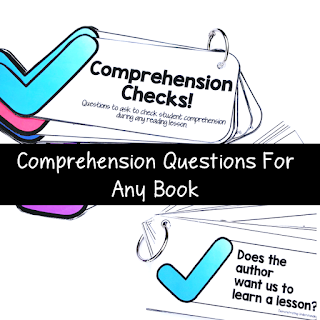
As teachers, we know that reading comprehension is the key to a student’s long-term success in literacy. However, developing this skill can be challenging, especially for early readers. It’s not just about decoding words—it’s about understanding, thinking critically, and making connections while reading.


Morning Tubs vs. Traditional Math Worksheets: Why Hands-On Wins!

How do you start each day in your classroom?  Morning work is a popular approach, but there are differing views of what morning work should look like.  Hands-on learning is best, especially with math morning tubs that my students beg to use each morning.


morning tubs vs math worksheets.  why hands on learning wins

15 Strategies to Effectively Manage Simple Tasks in Your Classroom

Managing your classroom environment is a must for your sanity and to make classroom management more effortless.  There are many things to think about, but I will share more about managing simple classroom tasks today.  Read on for 10 ideas, and check the end of the post to find out how to get 5 more hacks.  

Managing Simple Tasks In The Classroom


No More Busy Work: Why Math Tubs Make the Best Early Finisher Activities

Every teacher knows this feeling. Your students finish early and look up at you, asking, “I’m done, what do I do now?” Early finisher activities can be tricky to manage, especially when the rest of the class is still working.

Too often, the quick fix is a coloring page, puzzle, or “read a book.” While these options keep students busy, they don’t actually build skills. That’s why Math Tubs are my favorite solution. They’re hands-on, skill-based, and engaging, turning early finisher time into meaningful learning.

How to Effectively Teach Phonemic Awareness Skills Online

Teaching phonemic awareness skills can be a challenge, but what if you are trying to teach phonemic awareness skills virtually?  How does that work?  Keep reading to learn more about some things I tried while teaching phonemic awareness skills online.  

how to effectively teach phonemic awareness skills online and helpful resources to use.

5 Helpful Google Extensions for Stressed Out Virtual Teachers

Pivoting to virtual learning has not been a fun experience!  Kudos to all of the teachers who have been running virtual classrooms for quite some time now.  It is a totally different way of teaching! Not only do you need to teach, but you need to be a tech expert in navigating platforms, websites and extensions.   I am not claiming to be an expert, but being thrust into the world of virtual teaching has meant that I have spent a lot of time looking for ways to save my time and my sanity.  I am sharing 5 extensions that I am using and finding helpful.  


How to Use Morning Tubs When You Can't Share Manipulatives

In the age of COVID, so many things have changed, especially how children can participate in hands-on activities like morning tubs.  Despite these changes, you can still get those morning tubs and manipulatives into your student's hands, and I'm going to share with you exactly how!  


You can use morning tubs in a socially distanced classroom during Covid.  Learn how to set up morning tub kits so kids can still have some hands on fun.

How Digital Task Cards Can Keep Kids Learning At Home

Distance learning, online teaching, distance education.  Call it what you want, but millions of children are learning from home.  As teachers, we have been moving rapidly from teaching our children in our classrooms to trying to provide instruction to them through the computer.

Use digital task cards, like boom cards to keep student engaged and learning while at home.


4 Tips to Help Manage Transitions in the Classroom

Transitions in a classroom are always a challenge, especially in a primary class.  Some of my first graders are super speedy, and some are like sloths!  I am here to share a few tips to help speed those kids up when you are trying to transition from one activity to another.

4 tips for managing transition times in your classroom